
The administration app for clubs, groups, teams, and associations.
Get started now




This topic is crucial not only for the future of our society but also for the future of every individual club. We share valuable tips and practical insider knowledge on how to best challenge and support young people.
In this article, youth development refers not only to the financial aid from third parties known by that name, but primarily to the support and development of children and teenagers by the club. But how important is it for your club to take on this effort?
In principle, most clubs thrive on working with young people, especially since the youth grow up to ensure the continuation and survival of the club. Furthermore, when they succeed, it is not just the individual children and teenagers who benefit, but also the clubs themselves, which gain greater recognition as a result.
Furthermore, clubs are brought together by their youth members. New members are usually found among parents, siblings, friends, and relatives who catch the children's enthusiasm.
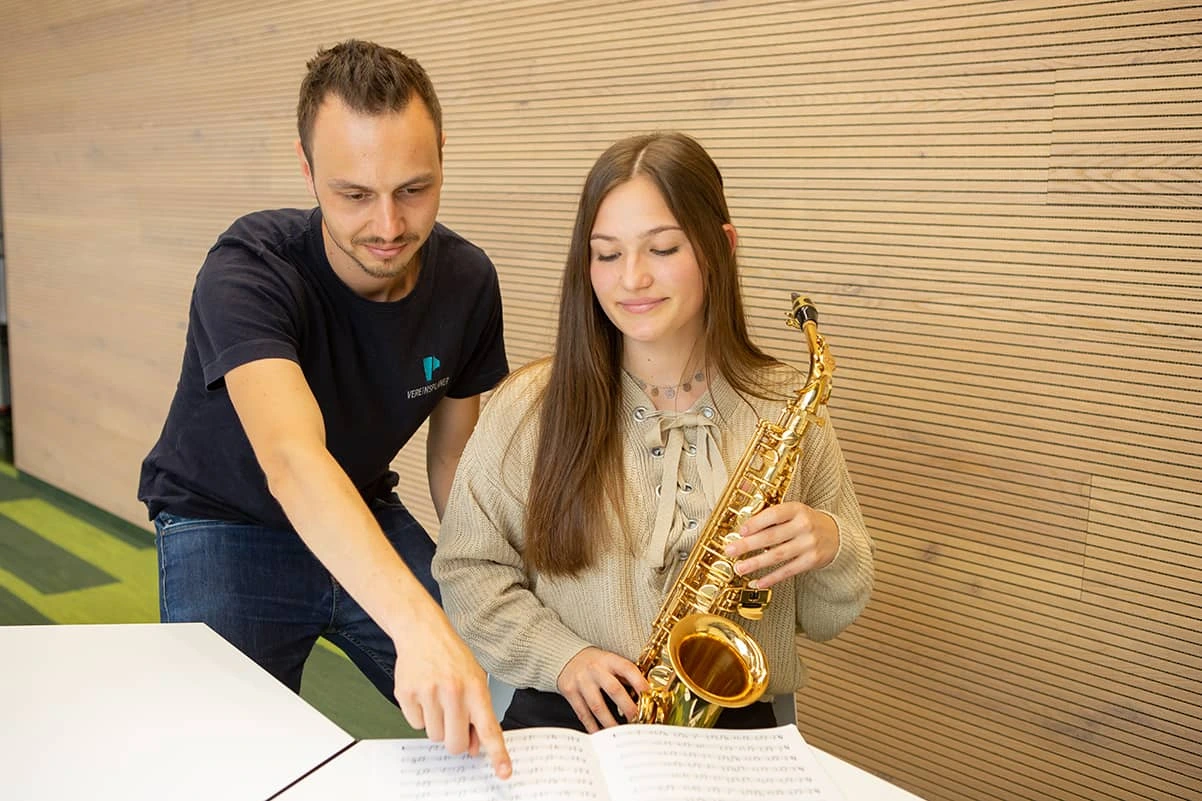
And last but not least, by handling both successes and failures correctly, children and teenagers are prepared for real-life situations. We live in a time where motivation combined with ambition can take you very far—and the role of clubs can be to provide exactly that support.
In summary, the time and resources invested lay the foundation for a successful future for both the club and the child.
Above all, children should have fun pursuing their "hobbies." When they feel joy, young people are eager to learn, attentive, and ambitious.
For many children and teenagers, it is enough to simply enjoy their hobby as a way to balance out their daily lives without too much effort. Success and intense training or rehearsals take a backseat; the club is seen more as a place to spend time with friends and pursue shared interests.
It is up to the coaches and adult club members to create incentives that keep young members excited about their hobby. For example, through small, internal club competitions that spark ambition even in these children and teenagers. However, it is important to ensure that no pressure is placed on the youth—if pressure is applied too early, it can cause motivation to vanish very quickly. It is more effective to motivate children to the point where they have the drive to push themselves to improve.
Games related to the hobby, well-structured training or rehearsals that open up new possibilities, or outings that bring the club closer together can all be motivators to keep coming back to the club and staying involved.
Children and teenagers who show great interest and potential for pursuing their hobby at a competitive level require a slightly different approach. These young people are ambitious, want to succeed, and are willing to invest a significant amount of time.
Pressure from coaches, parents, or the club is strictly off-limits; young people can only perform at their best when they are self-motivated and fully committed. Therefore, support that avoids performance pressure while fostering healthy ambition is an essential aspect.
Support for young competitors can be provided, for example, by the club supplying high-quality equipment. Organizing travel to and from competitions also significantly relieves the burden on both the children and their parents.
A key element in supporting discovered talent is, as is well known, regular training or rehearsals led by coaches specifically trained to work with young people. This passion and "spark" should not only be felt by the youth, but ideally by everyone working with them.
Be part of over 15,000 clubs


Secure your mega discount now with the code VP50DACH.VP30DACH.
Achieving goals in life is a mindset that doesn't stop after practice or rehearsal. Children and teenagers don't distinguish between "I'm ambitious during the competition, but lazy in real life."
This is exactly where parents come into play again. It is important to get them on board as well, because for most children, parents are their biggest role models. Young people always act the way they see modeled and learn by observing. Giving children genuine, undivided attention is the greatest gift anyone can receive during their development in a club.
In plain terms, this means that if a family is generally very active in the club, the chances are higher that all family members will be highly committed and ambitious. The same applies to their circle of friends. Children who have fun with friends during "competition" will achieve great results.
Since children and teenagers are in the middle of their development, they must be treated differently than adults. The mental aspect plays the most important role here, while in sports activities, the physical aspect is almost equally important.
For the position of youth coach/leader, it is important to appoint a person who possesses social skills for working with children and teenagers. The supervisor should be able to listen to the young people, understand them, and respond to their needs. Furthermore, the well-being of the youth should be their top priority, and rehearsals or training sessions should be designed to be engaging for the respective group.
For sports-related hobbies, it is essential to consider the bodies of children and teenagers that are not yet fully developed and to adapt training and goals—which should be worked out together with those involved—accordingly. This prevents pain, discomfort, loss of interest in the hobby, and, in the worst case, permanent damage or deformities.
A great investment, especially for high-performance youth, is to hire trainers specifically trained to work with children and teenagers, who can either be booked for specific course days or employed permanently. Ideally, this should be someone who has been successful in this field themselves. This is because children are more likely to believe people who have gone through similar experiences and achieved similar successes.
The guidelines for financial youth funding in Austria, as in other countries, vary from state to state, canton to canton, and year to year. Nevertheless, the general principle of the Youth Promotion Act, which governs the funding of extracurricular youth work and youth education, still applies.
The purpose of this law is to provide financial support for methods that educate young people outside of school and help them develop mentally, psychologically, physically, socially, politically, religiously, or ethically.
You can always find up-to-date details and information on this topic on the website of the Austrian Federal Chancellery.
In Germany, there are specific organizations that specialize in youth development; for example, Gütersloh.de is worth mentioning. Their site contains a lot of information on this subject.
On the Swiss Confederation website, you will find everything you need to know about this topic in Switzerland.
For Austria, we have also written a detailed article on the topic of funding. This also covers youth funding at the federal state level.
We have already covered how to find new adult members for your club in our finding members article, so now for the final and most important question: How can I specifically attract new young talent to my club?
The principle of how to attract children and teenagers to your club is relatively simple. Once they are enthusiastic about something, it is hard for them to let go of it.
It is therefore important to make the club interesting for children, to take the different age groups into account, and to involve the parents as well. For many children, pursuing a hobby is only possible with the support of their guardians.
New recruits can be made aware of the club through initiatives like holiday activity programs, social networks, or positive word-of-mouth from other children and teenagers.
To make a lasting first impression, it is important to approach potential new members as soon as you meet them, welcome them warmly, and familiarize them with the club's activities right away. It is also helpful to involve acquaintances who are already in the club to create a sense of belonging and trust from the very first second.
This is how you can relatively easily find new members and use the measures mentioned above to challenge and support them. We wish you every success and are happy to answer any questions, suggestions, or further input at support@vereinsplaner.at.
Supporting young people also means ensuring a safe environment. Our checklist helps you keep track of key questions regarding youth protection in everyday club life – for activities, events, and working with young members.

Together with nine industry experts, we have written a 98-page ePaper on current topics related to club management. The ePaper contains 5 chapters and 15 subject areas covering key aspects of organization, members, funding, sponsors, taxes, and much more. You can download the handbook for free on the Vereinshandbuch website.