
The administration app for clubs, groups, teams, and associations.
Get started now

.webp)


Are you struggling to find new members? You're not alone – many other clubs and organizations in Austria, Germany, and Switzerland face the same challenge. We'll give you 12 tips on how to easily attract new members.
Getting new club members depends very much on how you present yourself as a club, what goals you pursue and whether you can inspire people to make a “volunteer” contribution in an area. This article focuses on the members and their tasks and that is also where they should be in a club.

The first point is also the most promising, because if you already have satisfied, motivated club members, it’s much easier to recruit new ones. People who feel at home in their club convey that sense of belonging to those around them outside the club as well.
Members will brag (meant positively) not only with stories from the last trip, but also with proud words about what they have achieved together as a club. If you only have a few members in the club, then you are doubly in demand as a board member, as an ambassador. Share your enthusiasm—get involved with the club and commit to the goals outlined in the club’s bylaws.
Practical tip
No matter how intensively you are looking for members, if you show a different picture to the outside world, as is actually the case in the club, then you will not appear authentic and will also have a harder time getting new members. There is nothing wrong with reminding your own members that they can actively address acquaintances from the surrounding area — you'll see it works.
Depending on how urgent your situation is, you need to be aware that actively searching for members will also take time and resources. There are various ways to reach out to new members. A suitable strategy is summarized below:
What is the membership situation in your club? Are enough new members joining? Why are too few members joining? Ask members what is going well and badly in your club. Anonymous surveys are ideal here.
Who are you looking for for your club? What kind of people? How do you reach these people? You have a network in this area — use it actively, reach out to people in a targeted manner and show why involvement in your club is worthwhile.
Where do you address your potential club members? Offline or online? At events or trade fairs? Through your own promotional material or in person?
What do you tell the other person? How do you respond to different types? Is your club and what you do interesting for your counterpart? What makes your club the best in town?
Many will not join your club when they first get to know each other, but perhaps after the second or third meeting. Change your approach from time to time and adapt to people — that's when it works.
Practice early — this also applies to clubs. Supporting young talent is undoubtedly one of the most important tasks of a club. Young members not only bring a “breath of fresh air” to the club, but some of them will most likely go on to become the next generation of leaders in your club.
Practice shows that certain types of clubs (soccer, rural youth,...) benefit greatly from youth work. Two things in combination are extremely important for children/young people:
Have fun in the club while learning new things. Clubs play a major role in shaping many of the character traits children develop—teamwork, a sense of responsibility, a willingness to learn, perseverance, and much more. Those who are committed to helping children automatically attract new young members to the club, not least because parents are happy to entrust their children to good hands.
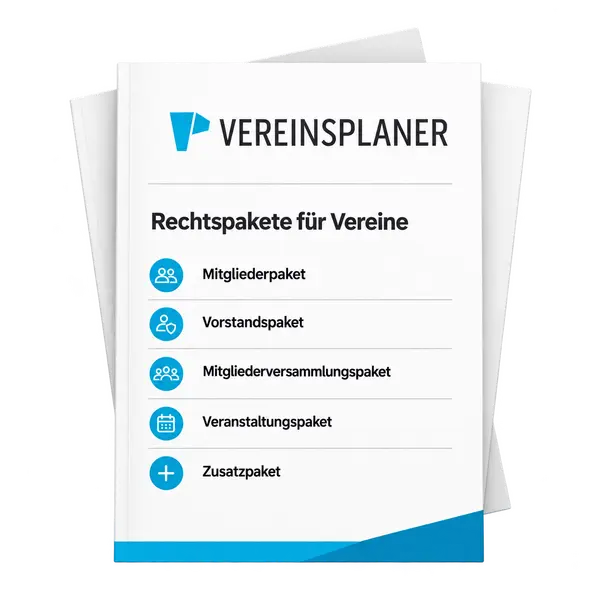
If you want to be on the safe side of the law, then we recommend our legal documents with 9 prepared legal proposals on member issues.

However, it is by no means only the boys who should enjoy club life. Benefits for older potential club members are just as important in order to achieve and retain them later. It is very important to understand why someone is joining your club. What is the intention behind this? There must be reasons — find them out.
Do you do it out of a love for people (fire department, emergency medical services, etc.), to stay in shape (sports clubs), or simply to meet like-minded people (cultural and music clubs, etc.)? The reason why the vast majority of people are in your club should serve as a message to the outside world, helping you attract new members to your club in an appealing way. Happiness in clubs depends on a variety of factors, some of which are, of course, covered in this article.
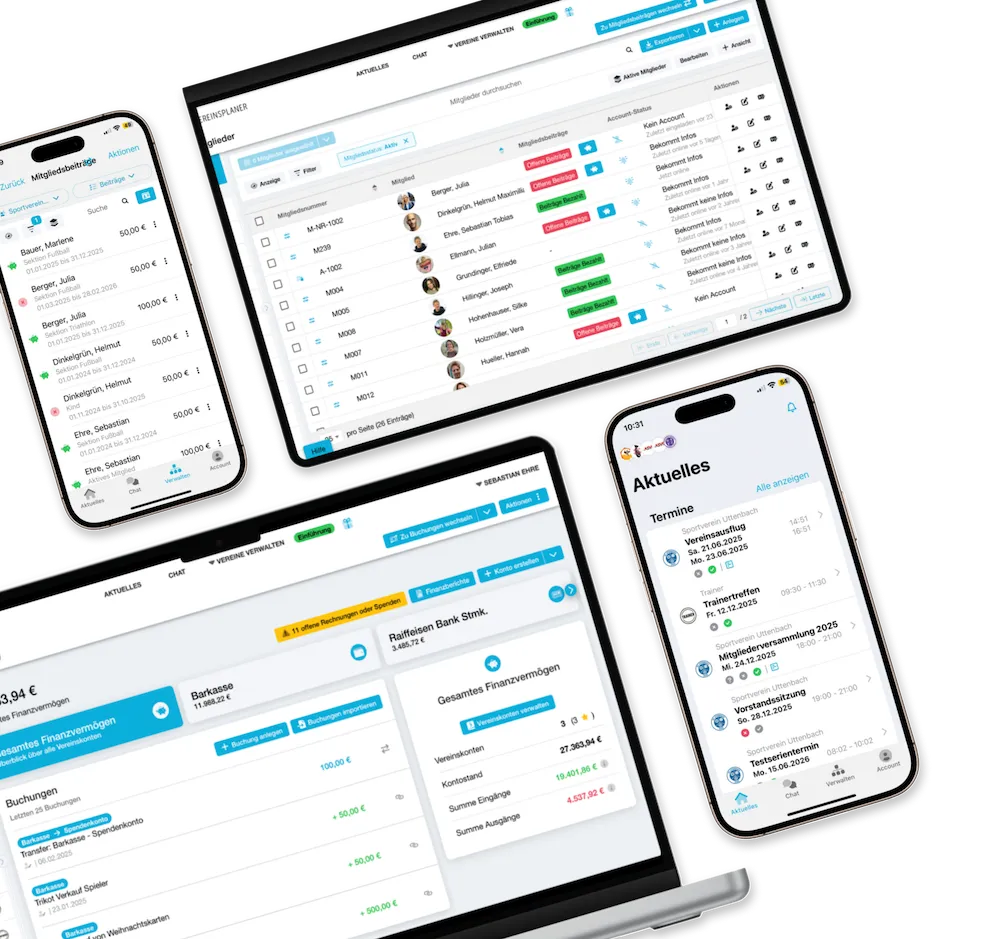
One final point that is often overlooked but is essential to a vibrant club life: clear and transparent communication. Before we started working with Vereinsplaner, we experienced firsthand just how complicated even small clubs can be when it comes to communicating with many different groups. This is where we come in with Vereinsplaner to support you as a board member and make your life a bit easier. We would be delighted if you had a look at the club planner Throw.
Join over 15,000 clubs
With this membership application template, you can make it easier for interested individuals to join your club. You can collect member data and provide information on dues and data protection. It is part of the membership package included in the Vereinsplaner legal bundles.
As you may have already noticed, the search for members is not just about the outside, but actually, if you want to raise it sustainably, a lot about the people in your own club. Why should you come up with any “goodies” when all you have to do is ask the existing members what they think of in the club. P.S. Doing a survey only when there are problems is clearly too late.
A regular survey (every six to nine months) across the club with five questions will help you immensely to understand what the problems and opportunities are in your club. You can do this on Vereinsplaner with the survey feature. Here you can ask the entire club up to ten questions per survey. Here is a small example of how a survey to find members can be structured:

Goals are important for a club — regardless of whether it is a party, a sporting achievement or a big concert. Let your members have a say in the “mission” of your club and be transparent when it comes to the club's goals.
Realistic goals are one of the strongest drivers of member motivation. Make it clear to your members how important it is to work together to achieve the goals. Don't skimp on praise and motivational words, because there will also be phases where not everything is going according to plan and it is precisely at these moments that it is a good example to set an example and support the members.
An open approach to goals also helps you to “sell” your club positively to the outside world in order to attract new members who can identify with your goals.
We cannot stress this enough: nurturing talent and recognizing potential must be at the top of your club’s agenda. Most people enjoy being good at something—but the prerequisite for that is knowing your strengths and developing your own talents.
If members are outstanding in an area, this means that this information also reaches the immediate environment of the club, e.g. through newspaper reports. This in turn leads to new members becoming aware of this and so the circle is complete.
Good members are an asset to the entire club. Because they usually also help lower-performing members to grow and motivate them. In this way, your members push each other up without it feeling like work for anyone involved.

Secure your mega discount now with the code VP50DACH.VP30DACH.
Through all your activities in the club, you gain a certain degree of public recognition. This can have a very positive effect on your image—not because you tell everyone how great you are, but mainly because your actions and achievements match your words. As a club, you can define values for yourself that help you to positively strengthen your public image. You might also be interested in this post, it shows how an optimal Public relations in the association could look like.
It is also recommended to show existing members which values are welcome in the club and which are more likely to cast a bad image of the club. A contemporary (online) presence is also very important in these times. This includes social media activities as well as modern club administration via a software tool, as well as a simple web presence. But you should always keep one thing in mind: Stay authentic.
Events or, as they say in Austria, “festivals” are a great opportunity to put your club in the limelight for a moment. The stage belongs entirely to you. The cooler and more organized the event is received by the guests, the better it is for you. Not only because you get positive feedback, but because it naturally motivates interested parties to join a club that organizes the “event of the year” in the village. Events also have two positive side effects:
In addition to the events mentioned above, you also have many options to plan less festive events, such as taster days and holiday game activities:
Collaborate with schools, where you invite individual classes to join the club, for example in physical education lessons.
Offers trial days where young people can take part in a trial session or something similar together. Together, the fear is usually not so great.
This type of event is perfect, because parents and children alike enjoy a bit of variety, especially during the long holiday season.
Give parents and children an opportunity to get to know your club away from any activity.
Many towns have Christmas or Easter markets every year. It is important for you to be represented worthily and to present your club with your best “products”.
With all the numerous measures we have mentioned above, one point should of course never be neglected. The fun. Because a club in particular should make leisure time more enjoyable and fulfilling. Having fun doesn't mean not taking your goals seriously, but approaching new challenges with a “healthy ambition”. From the very first moment, new members will see if you enjoy what you are doing.
Let's look at it soberly: What good are all the measures to get new club members if you can't keep the old ones? Therefore, this point should also not be neglected in all the measures.
But don't worry, none of this is a problem for you, because regardless of whether it's about acquiring new members or retaining old ones, as you've probably noticed, the measures are approximately the same. If you address the above points about acquiring members, you won't have any problems retaining members. A club is primarily about the people behind it and that is exactly why you can never pay enough attention to the individuality of the people.
Together with nine experts from practice, we have written a 98-page ePaper on current topics relating to clubs. The ePaper contains 5 chapters and 15 topics on important areas relating to the organization, members, funding, sponsors, taxes and more. A lawyer also addresses the issue of data protection. You can download the handbook for free from the club handbook website.