

The administration app for clubs, groups, teams, and associations.
Get started now

.webp)

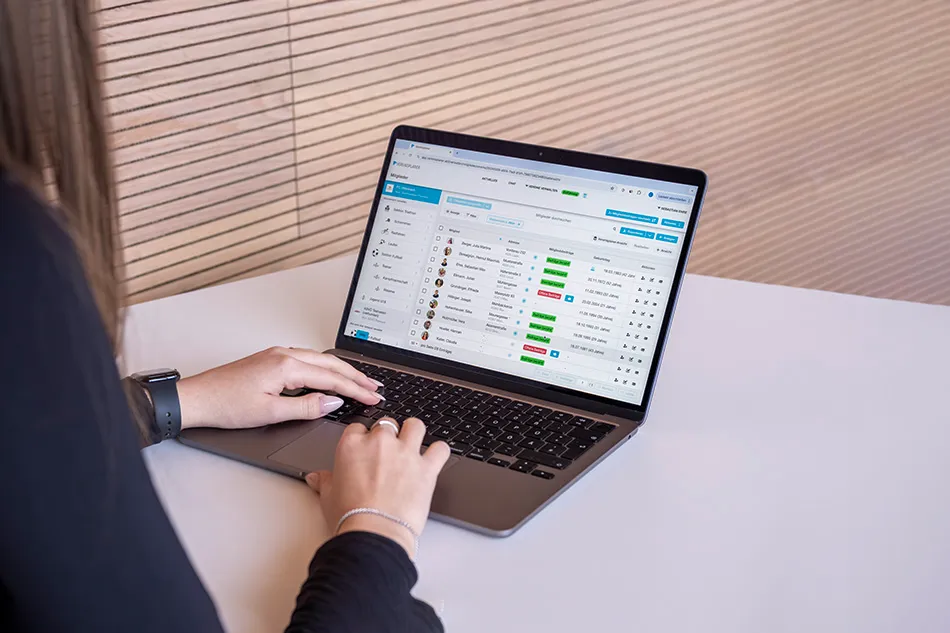
Wherever many people work on something at the same time, know-how and experience are built up. A successful club is defined by its ability to optimally apply, distribute, and preserve this knowledge internally.
By definition, knowledge management refers to strategic and operational activities and management tasks aimed at the best possible handling of knowledge. This means the goal is to properly document and store internal knowledge. Naturally, in a way that ensures access to specific information isn't limited to just one person.
A very obvious example for clubs is the documentation of donors and sponsors. Important information (names, contact persons, addresses, etc.) about sponsors is often only stored in the heads of a handful of people. This not only makes your organization inefficient in its operations, but in the worst-case scenario, all data is lost when a person leaves.
This is just one of many examples showing that creating knowledge silos is extremely dangerous. You can easily remedy this: document your processes, maintain clean data management, and take the time to share information. In this post, we’ll look at how to implement knowledge management without it becoming an extra burden.

The potential applications are virtually endless, with a few minor exceptions, as some information is simply "common sense" and not part of knowledge management. What does that mean in concrete terms? The following areas within the club are excellent candidates for a knowledge base:
The best way to handle these topics is to use a tool that shares information based on permissions. Much of this data falls under data protection regulations (GDPR). We will tell you which specific tools are suitable for this later in this article.
Free ePaper on digitalization
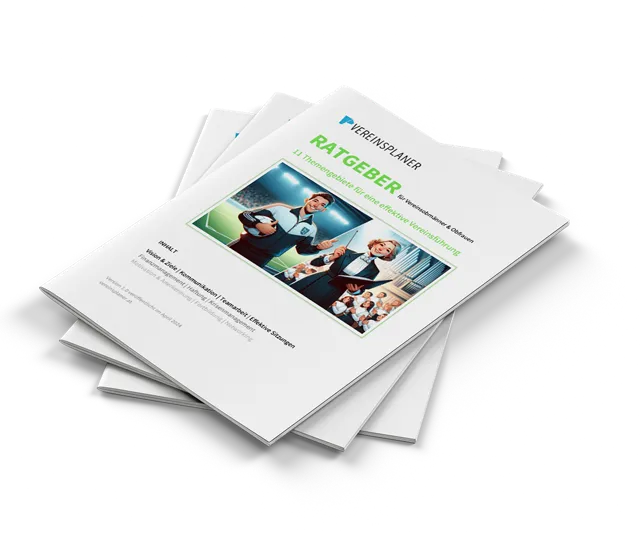
We have prepared the most important areas regarding digitalization for clubs and summarized them compactly in an ePaper. Get your club on the right digital track: Continue to ePaper download

In collaboration with a legal expert (attorney), we have created a download area featuring 35 documents as Word templates. In addition to board templates, you can purchase many other relevant legal templates covering the most important club matters for a small fee.
First things first: knowledge management only works if you do it right. If only 50% of the relevant information and documents are included, you might as well not bother at all. If you want to break down knowledge silos and decide to bridge information gaps between people, you should commit to doing it properly from the start.
This also means that the decision-making group needs to sit down and define clear guidelines. This doesn't mean that everyone has to manage the knowledge base to the same extent, but it does mean that someone on the board must take the lead, and all other knowledge holders must adhere to the process. In other words, structures are established together, one person keeps an ongoing eye on things, and everyone else uses the infrastructure and contributes their knowledge.
This can be illustrated quite well using the example of a club festival. You decide together (as a board) on a method for storing information (ideally in the cloud). All relevant individuals have shared access to the folders and save their information there in documents. For example, information on partners/suppliers, including price comparisons. Once such a document is created, it helps you choose the right partners every year. The same applies to sponsors who pay for a sponsorship in exchange for an advertising banner. All of this is valuable information that must not be lost.
The situation is similar in the other areas listed above. Ongoing documentation is required here as well—think of member or sponsor management. There is nothing more frustrating than having a high return rate on a mailout due to poor data quality (such as incorrect addresses), which ends up costing you money. It will certainly take some effort to ensure that people update documentation regularly rather than just doing a mandatory update once a year. However, by the second time you run a process, you will notice how much work you save yourself thanks to the good documentation you did the first time.
A knowledge base shouldn't become unnecessary overhead, or it simply won't be maintained properly. Focus on a good balance between quality and quantity. Not every minor detail is relevant, but it is important to document key information clearly. As is often the case, there is no right or wrong way, but you will quickly realize that if you are constantly searching for information you once received in an email but can no longer find, your knowledge management is not optimal. It’s as simple as that.
Be part of over 15,000 clubs
Get your first 6 months free with the code VP30DACH.
Save not only time, but also money!
*Valid when you purchase the first package with a duration of 12 months.
The primary goal of establishing a structured knowledge exchange is to avoid maximum data loss in unexpected situations. This can occur, for example, during the unexpected departure of personnel (whether voluntary or involuntary). Saying "If only we had..." after the fact is the wrong approach.
We have prepared a post on board transitions that takes a closer look at the transition process. If you follow the information on knowledge management and the guide for board transitions, you will have virtually no issues with data loss.
As previously announced, we would like to conclude by introducing a checklist and useful tools from our practical experience. The checklist is a simple Word document that you can expand as you see fit, helping you to correctly document information on individual processes for knowledge management.
Support for setting up your knowledge base correctly
Our Vereinsplaner was created specifically to address the massive loss of knowledge within our own clubs. We were constantly facing the same problem: before events, board changes, or trips, we would find that the information from previous years was missing again. This ranged from price comparisons for bus companies to records of sponsorship funds—we were starting from scratch every single year. That didn't just create extra administrative work; at the end of the day, it also cost us a lot of money.
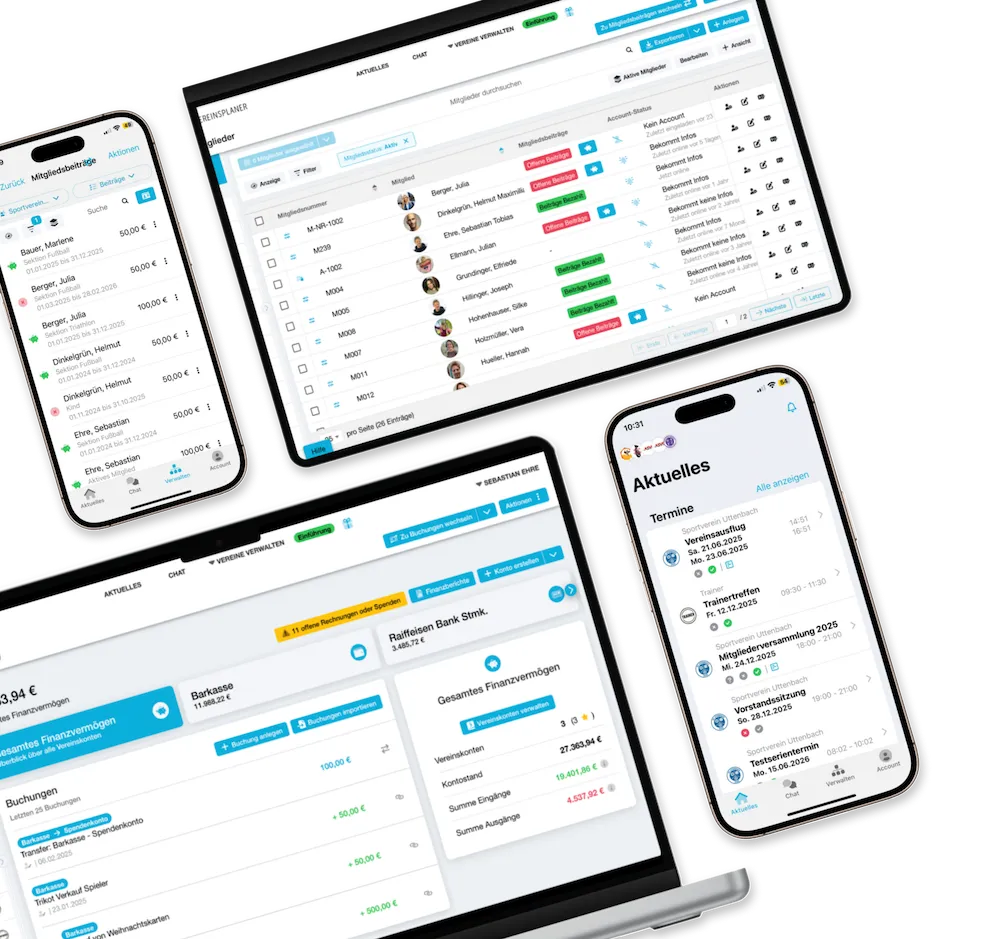
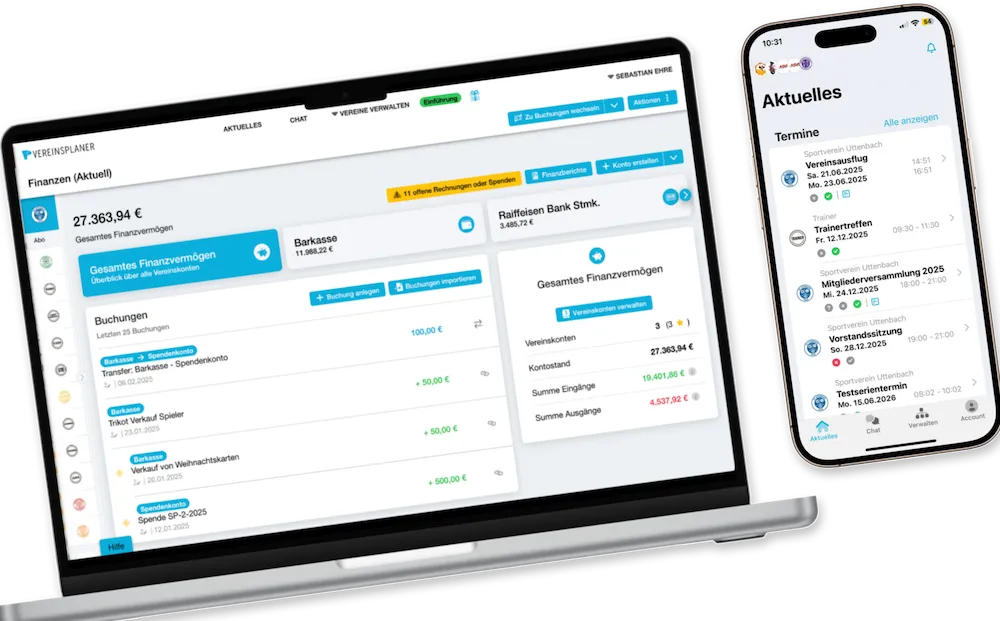
Over the past few years, we have continuously expanded Vereinsplaner to help you manage and store knowledge and processes efficiently through a single automated tool. This ranges from member management and online storage to financial and inventory management. Naturally, you can assign individual permissions to grant specific people access to different areas.
Create your club for free and try out the features
Another very common tool is Google Drive. It offers a practical way to easily collaborate on documents like Word, Excel, and PowerPoint from anywhere. Like Vereinsplaner, the entire system runs via the cloud and can be particularly helpful when developing content such as meeting minutes, strategies, and shared CRMs.
We also recommend that you stop saving important data locally on a single PC and instead set up cloud software for your organization, or at least use a cloud storage service. In 2024, the days of lost or broken hard drives and USB sticks should definitely be a thing of the past. Furthermore, it has been proven that documents that are just "lying around" quickly become outdated and are no longer useful, especially those that require frequent updates.
We wish you every success in implementing or expanding your knowledge management and all the best for the future.
Together with nine industry experts, we have written a 98-page ePaper on current topics related to club management. The ePaper contains 5 chapters and 15 subject areas covering key aspects of organization, members, funding, sponsors, taxes, and much more. You can download the handbook for free on the Vereinshandbuch website.