
The administration app for clubs, groups, teams, and associations.
Get started now




Public relations and communications are among the most important tools for clubs to attract new members, win over supporters and sponsors, and keep the public informed about events and developments.
When you think of PR, you usually think of press conferences and newspaper articles. But it is much more than that and, above all, perfectly suited for clubs—regardless of "major" athletic achievements or "huge" sponsorship deals. The following goals can and should be pursued through public relations for your club:
The biggest difference certainly lies in the goal of the two measures: while advertising is aimed more at economic goals (more revenue), public relations fulfills a socio-political function and influences public perception, for example by sensitizing local residents to various projects.
But PR is much more than that: when your happy members talk at the next village festival about how great the last club trip was, how smoothly the organization runs, or how much you support the youth, that is also an important form of public relations. Roughly speaking, public relations in a club basically always happens whenever the club presents itself to the outside world – on social media, at club events, in the media, during public appearances, in conversations, etc.
Another major difference: advertising primarily aims for short-term success, while public relations should be viewed as a medium- to long-term endeavor. The public's image of your club rarely changes with a single advertisement or event—it takes time for the public to notice your positive activities and results and for these to create a positive overall image of the club. With every public relations effort, you contribute to this overall image.
As in many other areas, relationships play an important role in public relations. In this case: relationships with journalists. Don't worry, as a community-oriented club, no journalist will be hostile toward you or intentionally make their reporting negative.
You can put this thought and the fear of negative coverage to the back of your mind anyway. Whether you have a contact at a regional newspaper or a local radio station, the person you will be speaking to comes from the field you are discussing or generally understands it. For example: A sports club will speak with a sports journalist, a music club with someone interested in music or a musician themselves, and so on.
Personal relationships are extremely important because they increase your chances of being mentioned in the first place. Editorial inboxes often receive far more topics than can fit into a newspaper or print magazine. It helps to be in personal contact with journalists who know that you send topics and contributions that meet their expectations and requirements, which ultimately means less work for the journalist.
You can find detailed information in the Vereinshandbuch
We spoke with the editor-in-chief of one of our media partners and, with his support, wrote a complete chapter on "Clubs in the Public Eye" for the Vereinshandbuch, which has been available as a free e-paper since November 2020. Go to the Vereinshandbuch
Be part of over 15,000 clubs
Secure your mega discount now with the code VP50DACH.VP30DACH.
Journalists love receiving exciting stories about your club's activities, especially when they offer broader social value. When reaching out to a journalist, please make sure you have considered the following points and incorporated them into your story:
Is the topic timely or relevant to a current event?
Does this medium actually have readers in that sector?
It is much more effective and easier for you to be featured in the local newspaper than in some random podcast in another state.
Is your club well-known in the district? Have you ever been featured in the press, for example, that you could reference?
It helps to simply have someone else proofread the email or article you’re planning to send to a newspaper beforehand.
If your topic taps into the current zeitgeist, it increases your chances of getting published. For example: collecting donations in winter for the homeless who have to live on the streets in freezing temperatures, or organizing community clean-up events in the spring.
Emotions always resonate with readers.
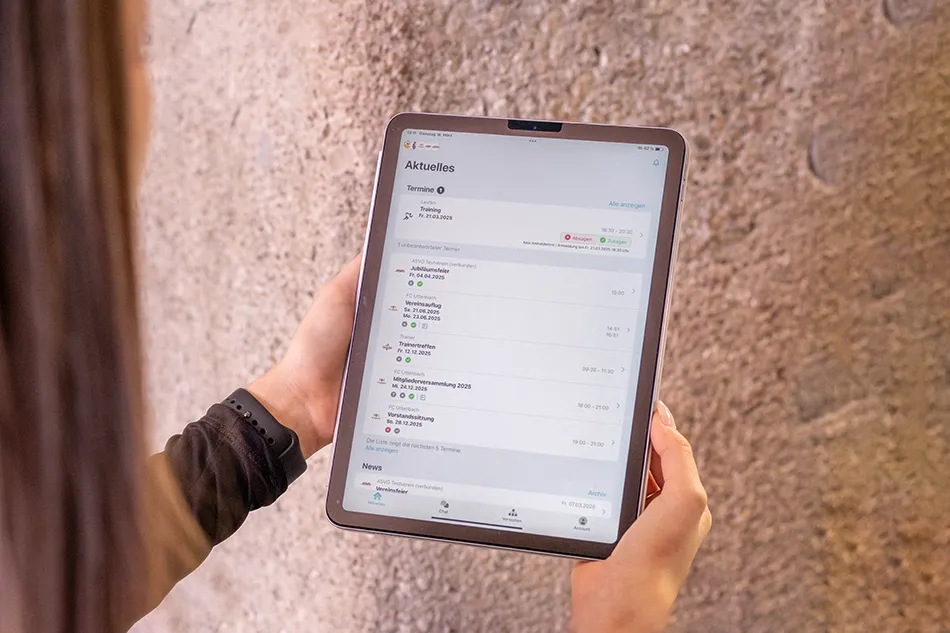
Here are a few tips on how to quickly find relevant topics and the corresponding editors:
At regional newspapers, journalists are often volunteers or work on a part-time basis. They have very little time to read through press releases. So, before you go into too much detail, just ask in advance if the topic might be of interest.
The most important information should be included, of course, but please don't send a 3-page article – this saves both you and the journalist a lot of time. A quick tip: if you want to build rapport from the start, always structure your press releases according to these criteria:
Public relations needs to be organized to ensure it actually gets done. It would be dishonest to claim that PR isn't work. The person responsible for this is the press officer. They should ideally meet the following criteria:
At regular club meetings or even just at the annual general meeting, the press officer should disclose their work. What has been done, what is planned for the new year, and how can everyone contribute (at least a little) to the PR work?
All of this should be discussed regularly, which also takes some of the workload off the press officer. Every single member can contribute to the positive overall image of the club – you should raise awareness for this. It should feel less like a chore and more like a great tool, so that you as a club never have problems finding new members.
If you want to appeal more to young people, you should focus more on the club's online presence, i.e., the website and social media accounts. The website should always be kept up to date; perhaps you can also blog about everyday club life there and clearly announce all dates. We have already written a post on how you can use Google My Business as a web hub for your club.
For social media, we recommend being where your fans/members and similar audiences are. This is usually Facebook, Instagram, and for the very young, TikTok. You surely have someone in the club who is active on one of these platforms. It can therefore make sense to appoint a specific person as a social media manager. They would then work very closely with the press officer.
It is important that you commit to a clear fan group and that the press officer or a person specifically responsible for this really knows how to reach them. To build this expertise, you can find numerous (including free) tutorials on the internet.
A positive effect: Through social media, even small clubs have great opportunities to land additional sponsors. If the club has an interesting presence with corresponding reach, its relevance to sponsors increases.
Through public relations (and PR), you can change the overall image of your club in the public eye in the medium to long term. Every event and every newspaper article can contribute to this overall image, just as much as the conversations your members are already having with friends, family members, and acquaintances.
You should raise awareness for this. PR can pursue a wide variety of goals – from sensitizing local residents to specific topics to acquiring sponsors. To conduct targeted public relations through the media, you should definitely build and leverage relationships with journalists. We have summarized what you should keep in mind in the "Checklists" in this article.
Let us know if you enjoyed this post or if you have anything to add from your own experience. All feedback is welcome. You can easily visit us in our Help Center. We look forward to hearing from you!
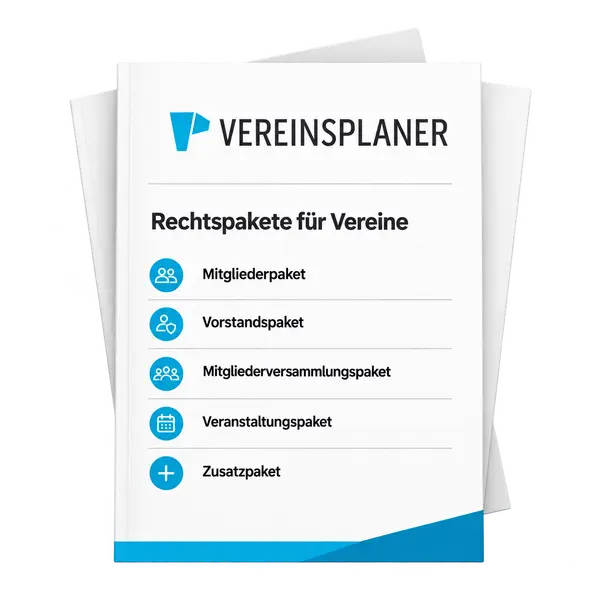
Use this image rights template to inform event participants about the taking and publication of photos. Both a detailed and a short version are available. It is part of the event package within the Vereinsplaner legal packages.
Together with nine industry experts, we have written a 98-page ePaper on current topics related to club management. The ePaper contains 5 chapters and 15 subject areas covering key aspects of organization, members, funding, sponsors, taxes, and much more. You can download the handbook for free on the Vereinshandbuch website.