

The administration app for clubs, groups, teams, and associations.
Get started now

.webp)


Choosing the right accounting method is an important step. In this article, we will look at two common approaches: income-expenditure accounting (EAR) and double-entry bookkeeping.

Double-entry bookkeeping is a fundamental concept in financial accounting that is occasionally used in clubs and organizations. It offers a structured method for recording, organizing, and analyzing financial transactions. Here are the fundamentals, as well as the definition and use cases of this important accounting principle:
If you want to learn more about EAR, you can find an article here: EAR and EÜR in Focus
Double-entry bookkeeping is based on the principle of offsetting debits and credits. Every financial transaction is simultaneously recorded in two accounts: a debit account and a credit account. This ensures that the balance sheet is always balanced.
Double-entry bookkeeping is an accounting system in which every transaction is recorded in at least two accounts to ensure a complete and accurate record of a company's financial activities. Debit and credit entries are offset against each other to create the financial balance.
Although double-entry bookkeeping is an extremely robust and accurate accounting system, it also has some limitations and specific use cases.
Complexity: Double-entry bookkeeping requires a certain level of accounting knowledge and may be too complex for small clubs or organizations with limited resources.
Time Commitment: Correctly implementing double-entry bookkeeping requires time and diligence, as every transaction must be recorded twice and reconciled. This can be a challenge for volunteer bookkeepers in clubs.
Use Cases: Double-entry bookkeeping is particularly suitable for companies and organizations with complex financial structures, high transaction volumes, and a need for detailed financial reports. However, for smaller clubs or non-profit organizations, cash-basis accounting (EAR) can be a simpler and more practical alternative.
Overall, double-entry bookkeeping is a powerful financial management tool that provides businesses with an accurate and comprehensive view of their financial situation. Nevertheless, it is important to consider an organization's individual needs and resources to choose the most suitable accounting method.
In this short webinar, we'll show you how to efficiently manage contributions and keep track of your club's finances without stress – from start to finish.
Choosing between cash-basis accounting (EAR) and double-entry bookkeeping is crucial for a club's financial management. Here's a direct comparison of both accounting methods, along with practical tips and case studies to help you make your decision:
Stay in control with financial management
With Vereinsplaner, we aim to make financial management as simple as possible. The financial tool, which covers club accounting, invoicing & donation management, and financial reports at the touch of a button, significantly reduces administrative tasks and errors. This allows the main focus to be placed on the club's purpose and its leadership. Learn more about financial management for clubs.
Join over 15,000 clubs
Effective financial planning and double-entry bookkeeping start with a clear overview of income, expenses, and upcoming projects. Our checklist, including a sample template, helps you plan your club's budget and keep track of your finances throughout the year.

The choice between EAR and double-entry bookkeeping largely depends on your club's needs, resources, and goals. Weigh your options carefully and make an informed decision for efficient accounting.
EAR is particularly suitable for clubs and organizations with limited resources, a simple accounting structure, and low transaction volume. Small non-profit clubs, in particular, that primarily consist of volunteer members and have few revenue streams, can benefit from the simple recording of income and expenses through EAR.
Clubs with a low financial volume and less complex financial transactions can use EAR to manage their accounting tasks cost-effectively and efficiently.
Double-entry bookkeeping is suitable for clubs with more complex financial structures, larger transaction volumes, and stricter reporting requirements. Larger clubs, in particular, with diverse revenue streams, extensive projects, and a larger staff, can benefit from double-entry bookkeeping.
Clubs that are legally required to use double-entry bookkeeping, or those that need more detailed financial control and transparency, should also consider this method.
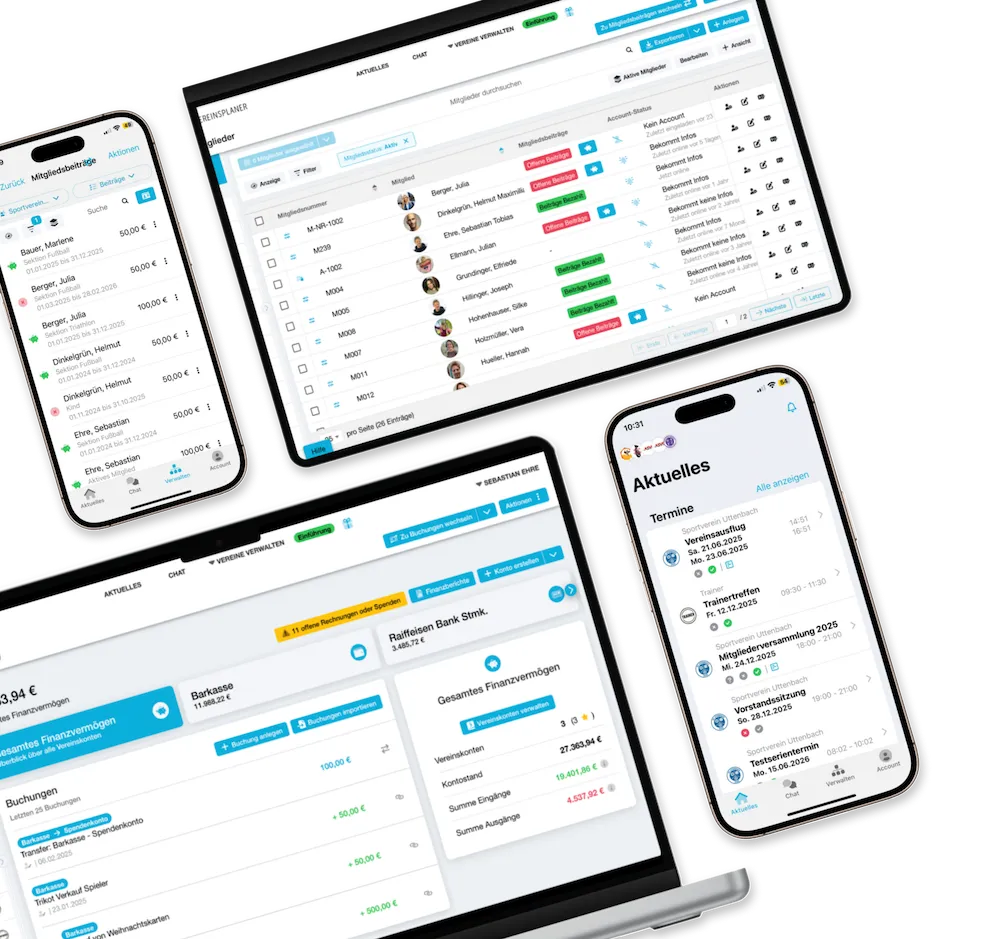

Secure your mega discount now with the code VP50DACH.VP30DACH.
Please note that this article is intended as initial information on the topic mentioned. It neither claims to be exhaustive nor does it assume liability for the accuracy of the information. This article cannot in any way replace professional legal advice, and anyone seriously dealing with the topic of finances in a club should consult a legal expert at the appropriate time.
Together with nine experts from practice, we have written a 98-page ePaper on current topics relating to clubs. The ePaper contains 5 chapters and 15 topics on important areas relating to the organization, members, funding, sponsors, taxes and more. You can download the handbook as a free download from the club handbook website.
Here you'll find answers to frequently asked questions about your club's accounting.
Cash basis accounting solely records actual cash inflows and outflows and is very straightforward. Double-entry bookkeeping records every transaction in at least two accounts (debit and credit) and also accounts for assets and liabilities.
For small clubs with a limited budget and few transactions, cash-basis accounting (EAR) is ideal. It saves volunteer bookkeepers a lot of time and doesn't require deep specialized knowledge.
Double-entry bookkeeping is advisable for large clubs with a high transaction volume, complex commercial operations, or legal obligations. It offers maximum financial transparency and detailed balance sheet reports.
The software simplifies accounting through digital cash books, automated invoicing, and financial reports at the touch of a button. This reduces errors and keeps the focus on the club's core purpose.